development and service history
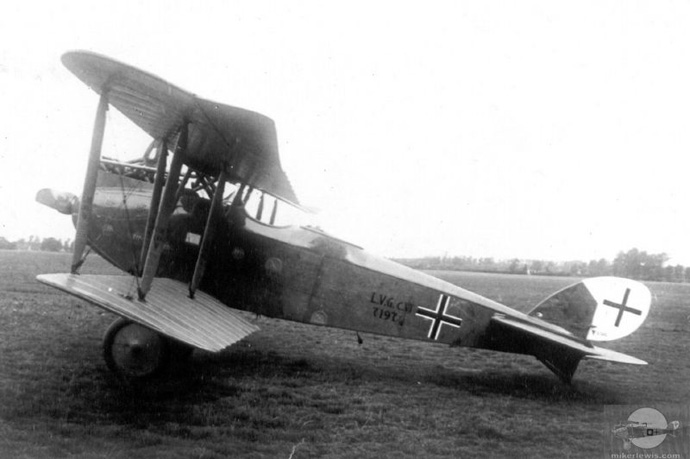
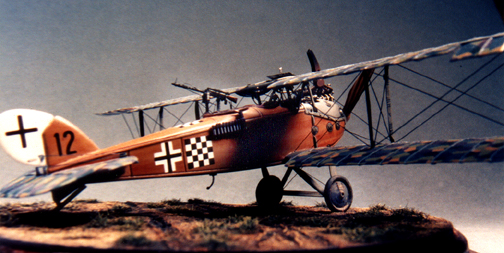
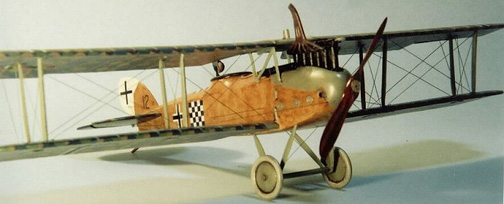
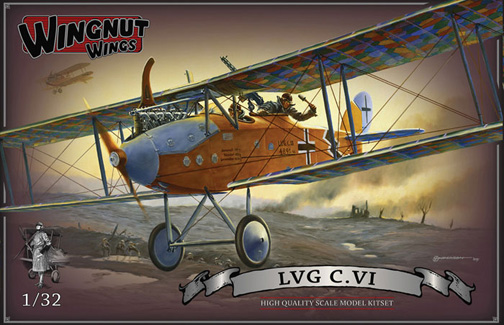
The LVG CVI was a short-range reconnaisance and artillery aircraft. A development of the very successful LVG CV, it shared the same Benz IVu engine. (The u designation meaning that this version had increased compression"uberkomprimiert".) The CVI was a lightened, more streamlined version of Willi Sabersky-Mussigbrodt's earlier CV design. |
specification
|
|
| Engine |
200hp
Benz Bz IVu (The power rating of each engine varied slightly
from
aircraft to aircraft and this was usually stamped on the engine plate).Later versions had aluminium pistons. |
| Fuselage length |
7.5 metres / 24.6ft |
| Wings (upper) |
|
| Wings (lower) |
|
| Weight laden |
1340kg / 2955lb |
| Weight unladen |
|
| Maximum speed |
165kph/ 102mph |
| Ceiling |
|
| Rate of climb |
|
| Armament |
Forward firing 7.92 mm Spandau, observer operated 7.92mm Parabellum |
| Radio |
Information could be transmitted via radio using a morse key. An aerial which simply consisted of an appropriate length of wire was lowered by the observer in order to transmit. The engine drove an auxilliary generator for this purpose . Communication was one way only, messages could not be received. One can only imagine the difficulty of tapping out a morse message at altitude with the vibration of the aircraft ! |
| Heated flying suits |
Both pilot and observer were equipped with heated flying suits. |
| Parachutes |
Parachutes were carried. |
| Number produced |
Estimates indicate that a total of around 800 were built up until production stopped in 1919. Many LVG CVI's too late to see front line action were used in civil roles and some were in use carrying post and even fare paying passengers in the early 1920's. |
| |
|